
- Get link
- X
- Other Apps
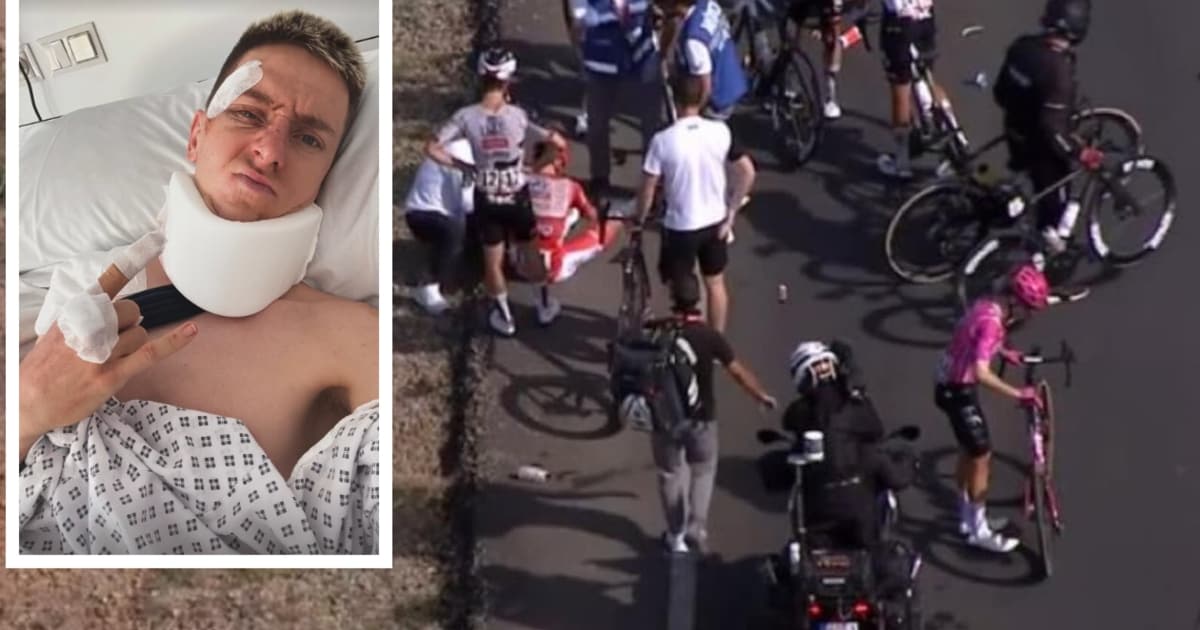
Slovenian star Tadej Pogacar says he is happy to be alive. He went through a very difficult recovery after a bad crash at the Vuelta, and those words stopped cycling fans in their tracks. This is a rider who wins the biggest races in the world, a man who makes the hardest climbs in the sport look easy. To hear him talk about simply being alive, rather than about winning, tells you everything about how serious that crash was.
Fans held their breath when the news first came out. A crash in a Grand Tour is never a small thing, and when the rider involved is the biggest name in the sport, the worry spreads fast. Messages poured in from other riders, from teams, and from people who have never watched a bike race in their lives but know what it means to fall hard and have to get back up. Pogacar is glad to be healing after the scary event, and that simple fact matters more than any result ever could.
What Happened to Tadej Pogacar at the Vuelta?
Bike racing is fast and can be very dangerous. Tadej Pogacar had a terrible crash during the Vuelta race. The hit was bad enough that he had a hard time getting better. Falling off a bike at top speed hurts a lot, and when it happens in the middle of a race, there is no soft landing. The road is hard, the speeds are high, and the rider often has no time to prepare for the impact.
He says he feels lucky just to be alive today. Many fans held their breath when the news first came out. People who ride bikes know how fast things can go wrong. A crash like that stays in your head for a long time. The body heals at its own pace, and the mind takes even longer to trust the road again. That is the part of a crash that people who have never raced often miss. The broken bones and the road rash are visible. The fear that comes back every time the road tilts downhill is not.
What makes this story hit so hard is the contrast. Pogacar is the rider other riders look up to, the one who attacks when everyone else is suffering, the one who seems to enjoy the hardest days. Seeing him brought down by a single moment on the road is a reminder that nobody in the peloton is untouchable. The same legs that win Grand Tours are just as fragile as anyone else's when the bike goes down.
Why Are Crashes in the Vuelta So Dangerous?
The Vuelta a Espana is one of cycling's three Grand Tours, three-week races that push riders to the edge of what the human body can do. The roads are often narrow, the descents are steep, and the stages can be decided in a matter of seconds. Riders race shoulder to shoulder at speeds that would get a car pulled over in a town center, and they do it for hours at a time, day after day, while already exhausted from the day before.
That combination is what makes a crash in a race like this so frightening. A rider who falls at speed can slide across the road, hit a barrier, or get caught up with other riders who have nowhere to go. The bunch behind has almost no time to react. Even a small mistake, a touch of wheels or a patch of bad road, can turn into a pile-up before anyone understands what happened. The medical teams are good and they are close by, but no amount of preparation changes the basic physics: a human body moving that fast, meeting a hard road, is going to get hurt.
There is also the heat and the terrain. The Vuelta runs through some of the most demanding landscapes in the sport, with long climbs in hot weather and descents that demand total concentration when the legs are already tired. Fatigue is the quiet enemy in the third week of a Grand Tour. A rider who is tired makes small errors, and at race speed, a small error is all it takes.
What Does Recovery From a Bad Crash Actually Look Like?
Recovery from a serious crash is slow, boring, and frustrating, especially for someone whose whole life is built around moving fast. The first part is the least glamorous: rest, medical checks, and waiting for the body to do its work. There is no shortcut. A rider who tries to come back too soon usually pays for it, and the people around Pogacar will know that better than anyone.
After the rest comes the rebuilding. Gentle movement turns into real training, one small step at a time. A short ride becomes a longer ride. A flat road becomes a hill. The rider tests the body, listens to what it says back, and learns where the limits are now. The injured parts need to be strengthened again, and the parts that were never injured need to remember how to work at race intensity. It is a process measured in weeks and months, not days, and it demands a kind of patience that does not come naturally to a champion.
Then there is the part nobody sees: the mental recovery. A rider who has crashed badly has to trust the bike again, trust the road again, and trust the riders around them again. The first fast descent after a crash takes real courage. The first time the bunch squeezes together at speed, the body remembers the fall even if the mind has moved on. Getting through those moments is as much a part of coming back as any training session, and it is why the support of family, teammates, and fans matters so much.
What Does "Happy to Be Alive" Tell Us About the Crash?
Sports stars do not usually talk like this. They talk about wins, about goals, about the next race. When a rider like Pogacar says he is happy to be alive, he is telling us that the crash changed how he sees things, at least for now. It is a sentence that puts the whole sport in perspective. The results, the records, the rivalries: all of it matters less than the simple fact that he gets to go home, see his family, and ride his bike again one day.
That honesty is part of why fans responded so strongly. People connect with an athlete who admits he was scared, who admits the recovery was hard, and who is grateful for something as basic as being alive. It is a reminder that the riders we watch on television are people first and athletes second, and that the courage it takes to come back from a crash is a different kind of courage from the one it takes to attack on a mountain.
It is also a message to every rider watching. If the best in the world can be hurt this badly and can say so openly, then the rest of us can admit that crashing is frightening, that healing takes time, and that asking for help is not a weakness. That is a useful thing for a champion to say, and it may be the most valuable thing to come out of a very bad day.
What Can Everyday Riders Learn From Pogacar's Crash?
You do not have to be a big star to understand this fear. Anyone who falls off a bike knows the sudden panic. Pogacar shows us that even the very best athletes get hurt. It reminds everyone to be careful out on the road. Regular people can look at him and find hope. A bad fall can stop you in your tracks for weeks. Seeing a great champion admit how hard it was helps others feel normal. Healing takes time and a lot of rest for everyone.
The practical lessons are simple, and they are worth repeating. Wear a helmet every time, even for a short ride. Slow down on descents you do not know, and give yourself more space in a group than you think you need. Keep your bike in good shape, because a worn tire or a loose brake is the kind of small thing that becomes a big thing at speed. And if you ride in a group, learn the calls and the signals, and ride predictably. The rider behind you is trusting you with their safety, just as you are trusting the rider ahead.
| Situation | What helps | What to remember |
|---|---|---|
| A fast descent | Slow down early, brake before the turn, not in it | You cannot win a descent on a training ride, but you can lose a lot |
| Riding in a group | Hold your line, signal hazards, and keep a steady pace | The group is only safe when everyone rides predictably |
| A wet or rough road | Lower your speed and give yourself more stopping room | Grip disappears long before you expect it to |
| After a fall | Rest properly, get checked, and return gradually | Coming back too soon is how a small injury becomes a long one |
What to Watch for Down the Road
Now the big question is when Pogacar will ride again. Fans want to see how his body handles the next big challenge. His difficult recovery was a long test of his strength. Everyone will watch his first move back on the pedals. The first signs to look for are the quiet ones: a photo from a training ride, a short update from his team, a race announcement that puts his name back on a start list. Champions do not usually announce their comebacks with a speech. They just show up, clip in, and ride.
He survived the crash and that is the most important part. Sports matter a lot, but staying safe matters even more. Pogacar is still here to smile and tell his story. His next race will be a huge moment for bike fans everywhere, whenever it comes. Until then, the best thing fans can do is the simplest one: wish him well, give him time, and remember that the rider who makes the impossible look easy is, underneath it all, a person who had a very lucky escape.
More Laughs From AI Hasi Factry
If you need a smile after a serious story, our funny comedy, jokes and memes that make us laugh every day is a good place to start. Then read about how Chloe Radcliffe gets a comedy special and hopes her old crushes watch, and finish with the lighter side of food and travel in James Talarico making tamales at an iconic El Paso bakery.
Questions About Tadej Pogacar's Crash
Is Tadej Pogacar okay now?
He says he is happy to be alive and glad to be healing, which is the most important news. A difficult recovery takes time, and he is working through it. Fans should expect updates from his team rather than guessing at a return date, and the fact that he is talking about the crash openly is a good sign in itself.
Will he race the Vuelta again?
That is the question everyone is asking, and there is no answer yet. Riders in his position come back when the body is ready, not when the calendar says so. The Vuelta will be there, and so will the other Grand Tours. What matters now is a full recovery, and his next race will be announced when he and his team are confident he is ready.
What happened in the crash?
He went down hard during the Vuelta race and the hit was bad enough to make his recovery difficult. That is what he has shared, and it is enough to understand why he calls himself lucky. The details matter less than the outcome: he survived, he is healing, and he is grateful to be here.
Here is to a full recovery, Tadej. The road will wait for you.
Comments
Post a Comment